Humane Society Website Design: Increasing Adoptions Through Strategic UX
Project Mission
Second Chance Humane Society's main objective is to prevent animal cruelty, promote kindness, and support all animals by providing them with a second chance at a good life.
My Mission: Design Washington's newest humane society website focused on people who love animals, improving their user experience while strategizing the organization's prosperous longevity.
The Challenge
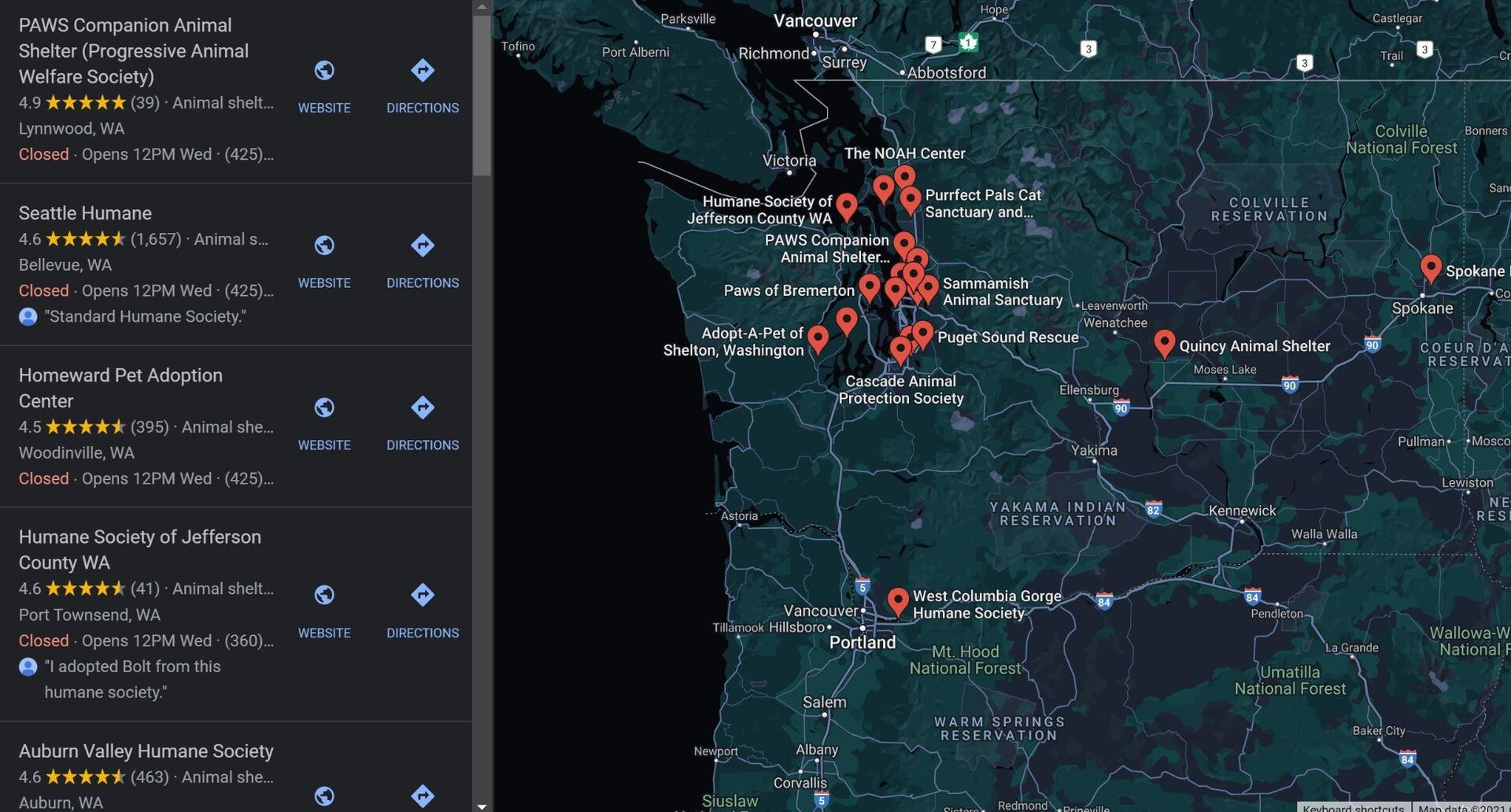
Through competitive analysis of Washington state humane society websites, I identified two critical problems that consistently prevented successful adoption outcomes:
Information Architecture Failures
- Not enough information: Users couldn't get answers to basic questions, leading to abandonment
- Too much information, poorly structured: Excessive, disorganized content made navigation difficult and overwhelming
- Phone call dependencies: Most sites forced users to call for basic information or appointment scheduling
- Multi-step friction: Adoption processes required multiple phone calls and in-person visits before seeing basic details
User Barriers to Adoption
Research from Civic Science's "Dog Shelters vs. Pet Stores" study revealed the top barriers:
- Behavioral concerns (15%): Belief that shelter dogs have behavioral issues
- Age preferences (6%): Wanted puppies or younger dogs specifically
- Fee concerns (6%): Perceived shelter fees as too high
- Other misconceptions (12%): Various unfounded concerns about shelter adoption
"My job is to inform and recruit these lost potential adopters by easing their minds on perceived negatives of adoption."
Research & Discovery
Data-Driven Insights
I consulted authoritative sources to build a foundation of industry data:
- HSUS (Humane Society of the United States): National trends and best practices
- ASPCA: Adoption statistics and donor behavior
- AVMA: Pet ownership demographics and veterinary data
- Government databases: Regional animal welfare statistics
Competitive Analysis: Spokane Humane Society
Deep dive into the 2020 annual report revealed critical insights:
Primary revenue source
Average stay for dogs
Average stay for cats
Key Takeaway: Individual donations were the primary income source, making the individual donor experience the main target for my framework design.
User Demographics (AVMA 2017-2018 Sourcebook)
Pet ownership data shaped my user persona development:
- Species preference: Dogs most owned, followed by cats
- Age groups: Ages 25-40 highest ownership (primary), ages 57-75 second highest
- Geography: Less urbanized areas had highest ownership at 67%
- Socioeconomic factors: Higher income, post-secondary education, married individuals more likely to own pets
- Ethnicity: White/Caucasian majority, Latino/Hispanic second
Primary Research Methods
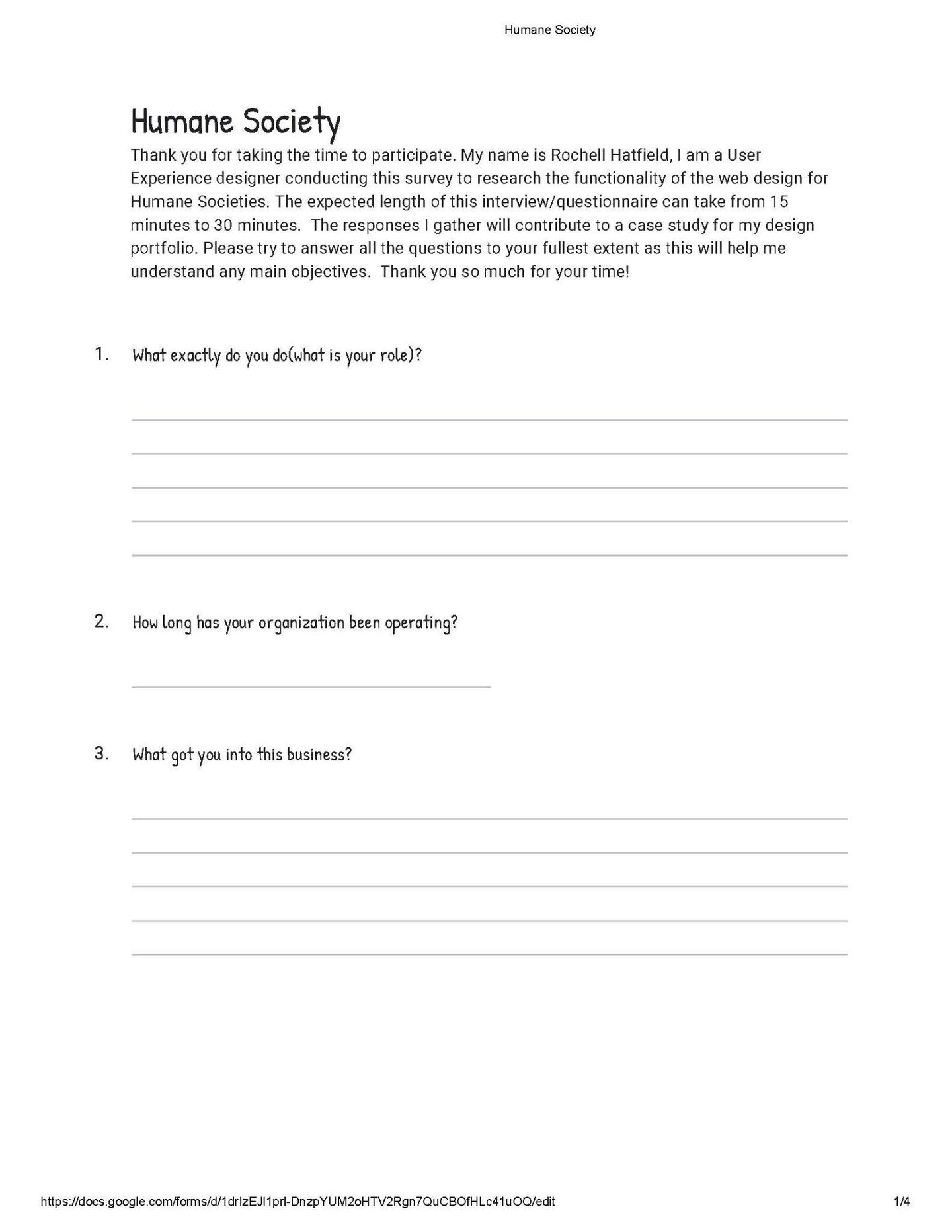
I created interview surveys targeting three stakeholder groups:
- Shelter workers/volunteers: Understanding operational challenges and adoption process pain points
- Pet owners who adopted: Learning what worked and what caused friction
- Pet owners who purchased: Understanding why they chose not to adopt and what could change their minds
User-Centered Design Strategy
User Personas & Journey Mapping
Based on AVMA data and qualitative research, I developed detailed user personas representing:
- Age ranges (25-40 and 57-75)
- Income levels (middle to upper-middle class)
- Family structures (married, families with children)
- Geographic contexts (suburban and semi-rural)
- Motivations, concerns, and decision-making processes
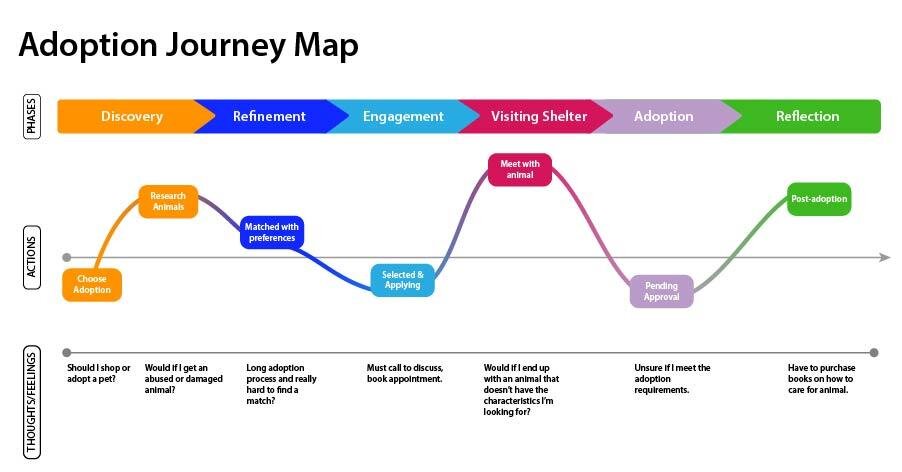
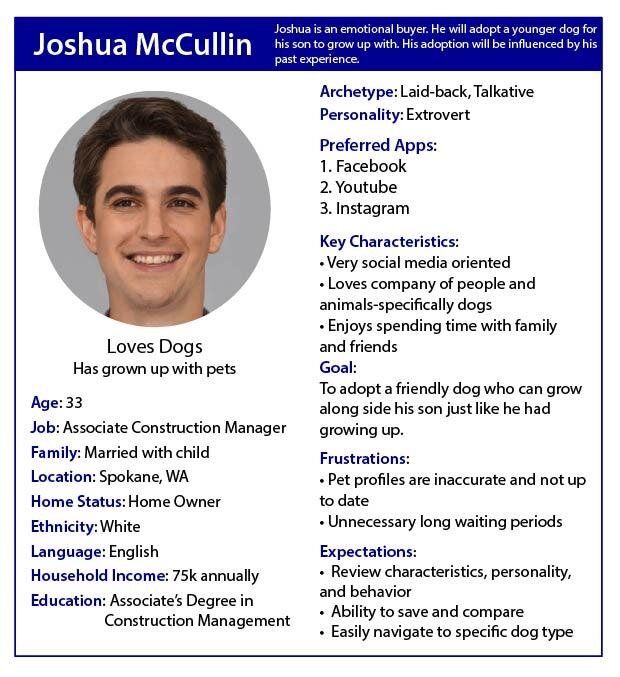
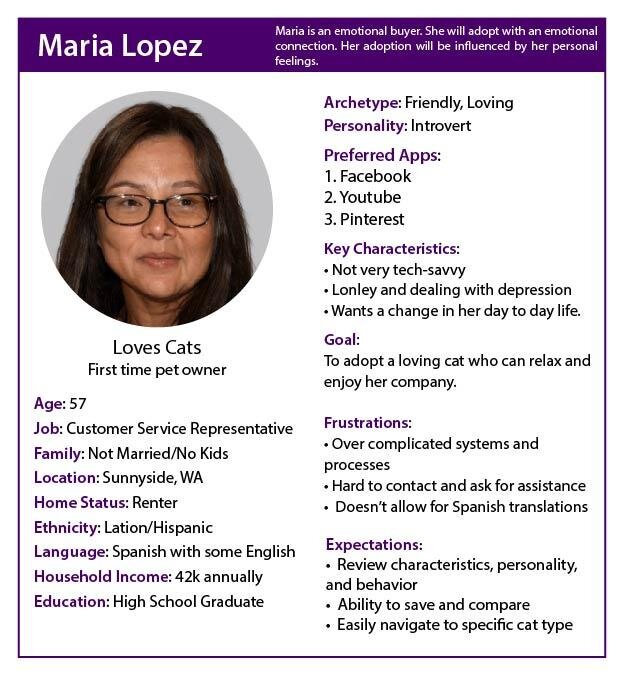
User persona development and journey mapping based on AVMA demographic research
I mapped complete user journeys from awareness through post-adoption to identify friction points and opportunities for improvement.
Wireframes & Information Architecture
I created low-fidelity wireframes to test information architecture before investing in visual design:
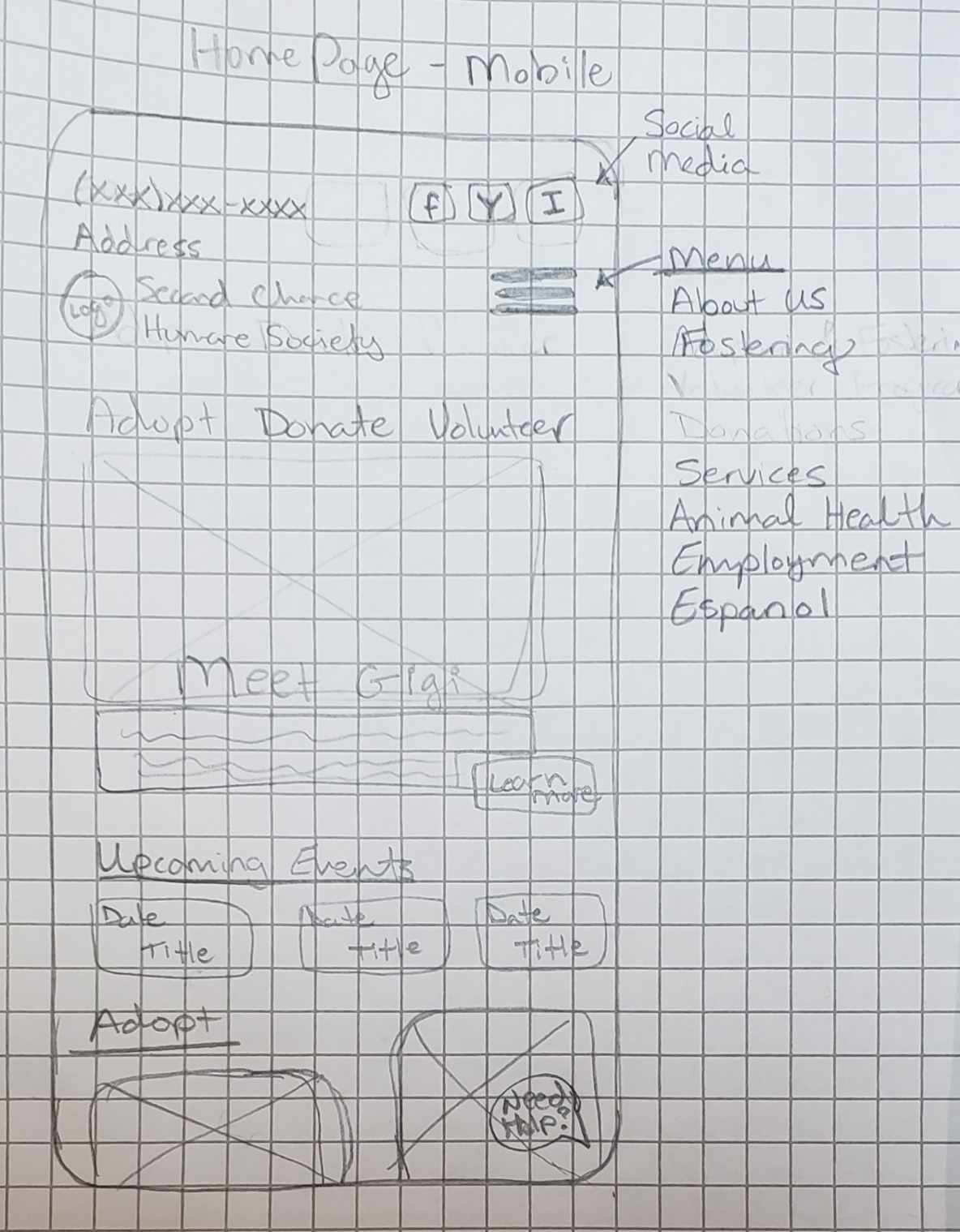
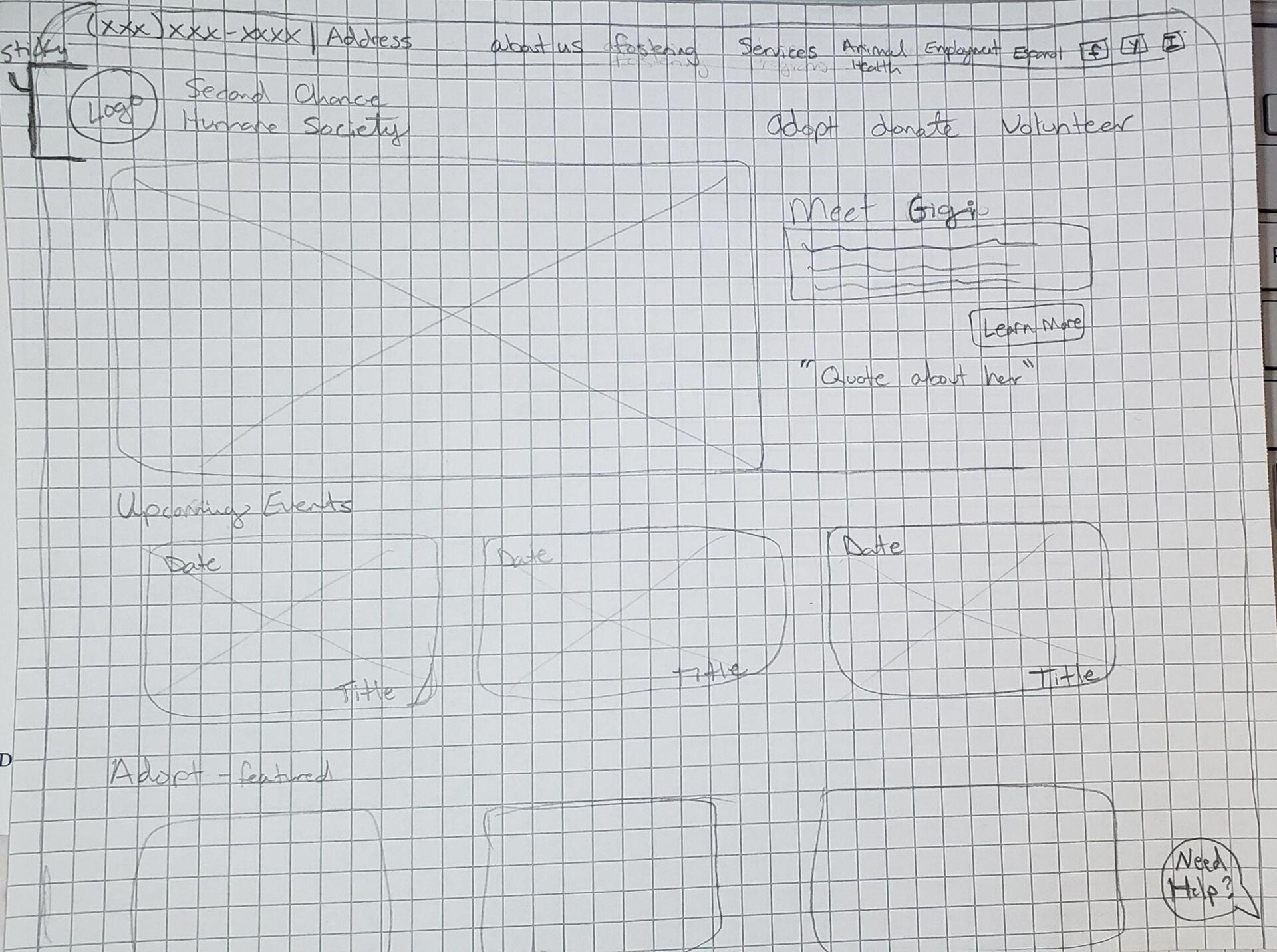
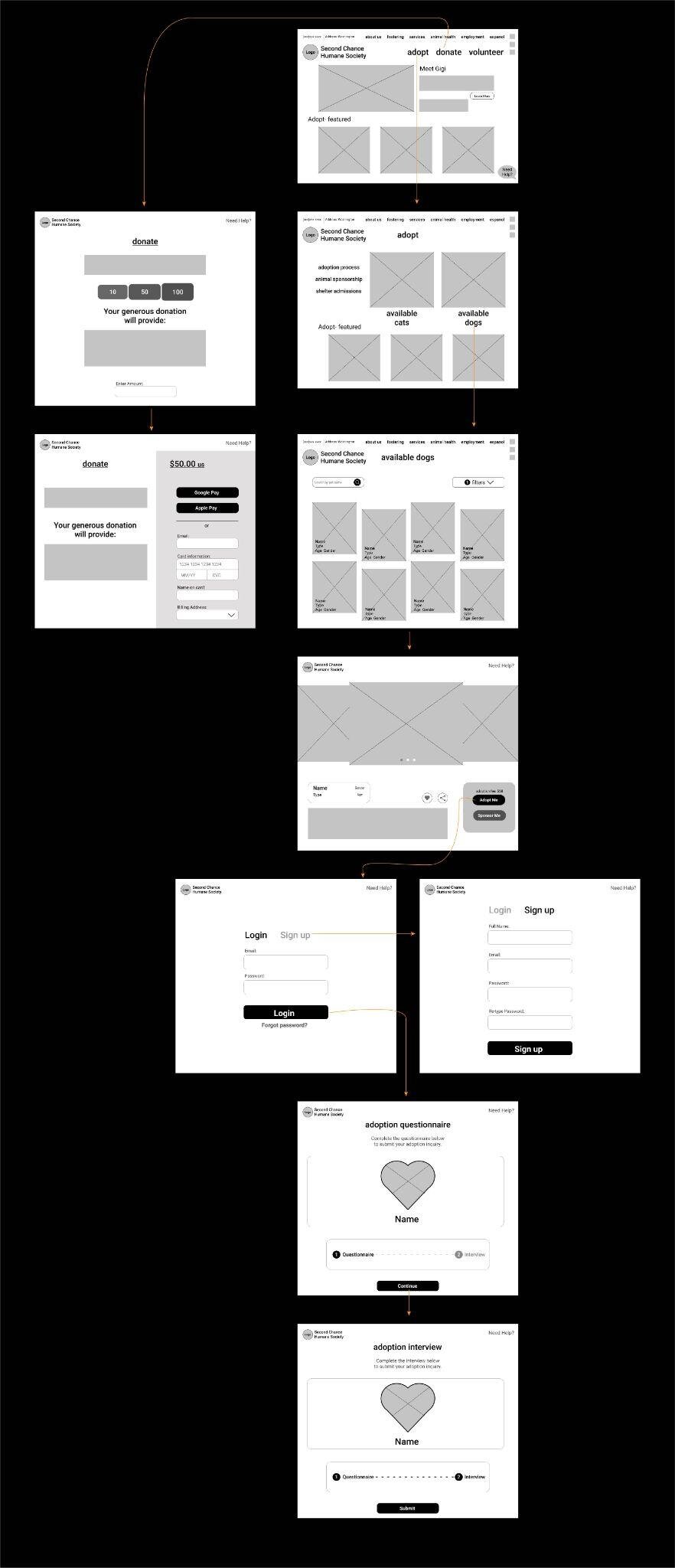
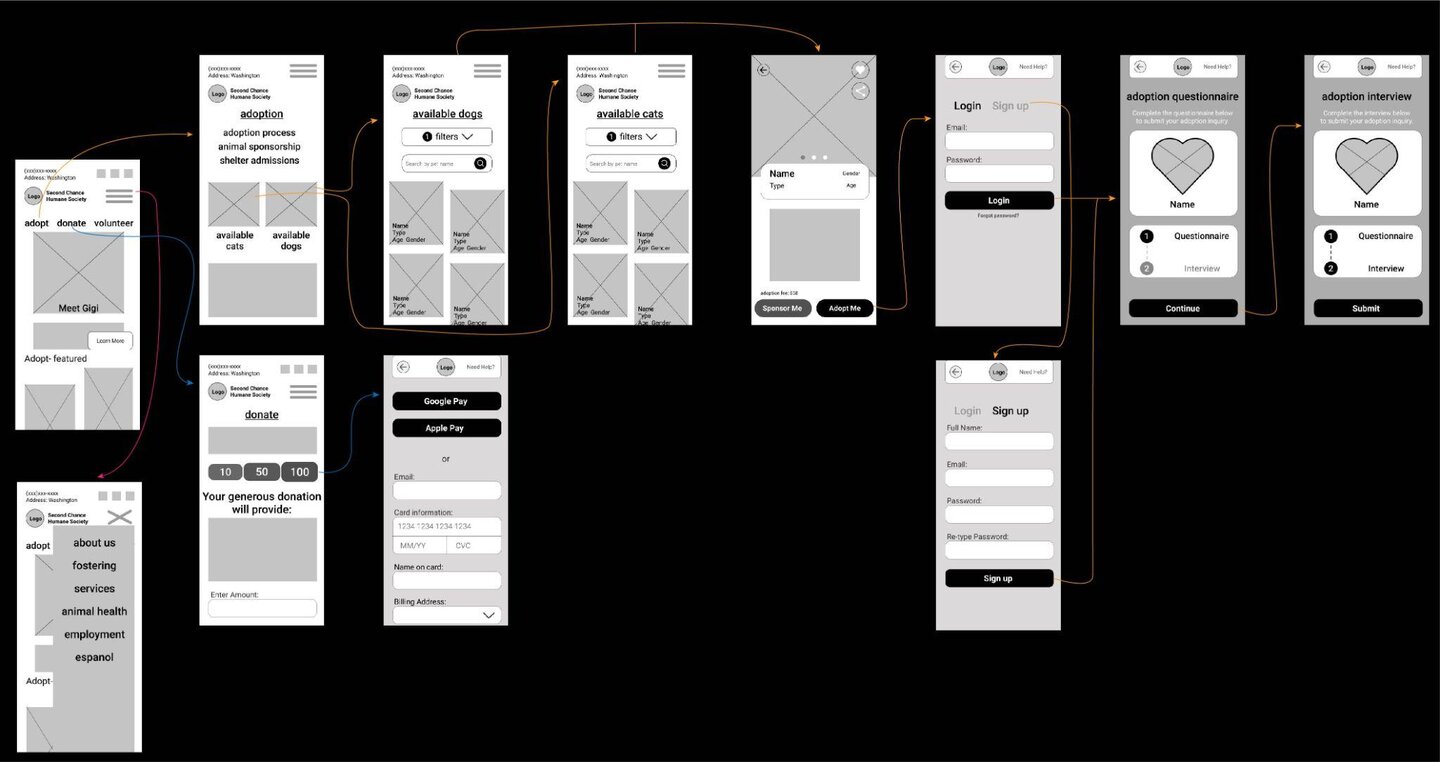
Wireframe iterations testing different approaches to content hierarchy and user flows
Information Architecture Goals
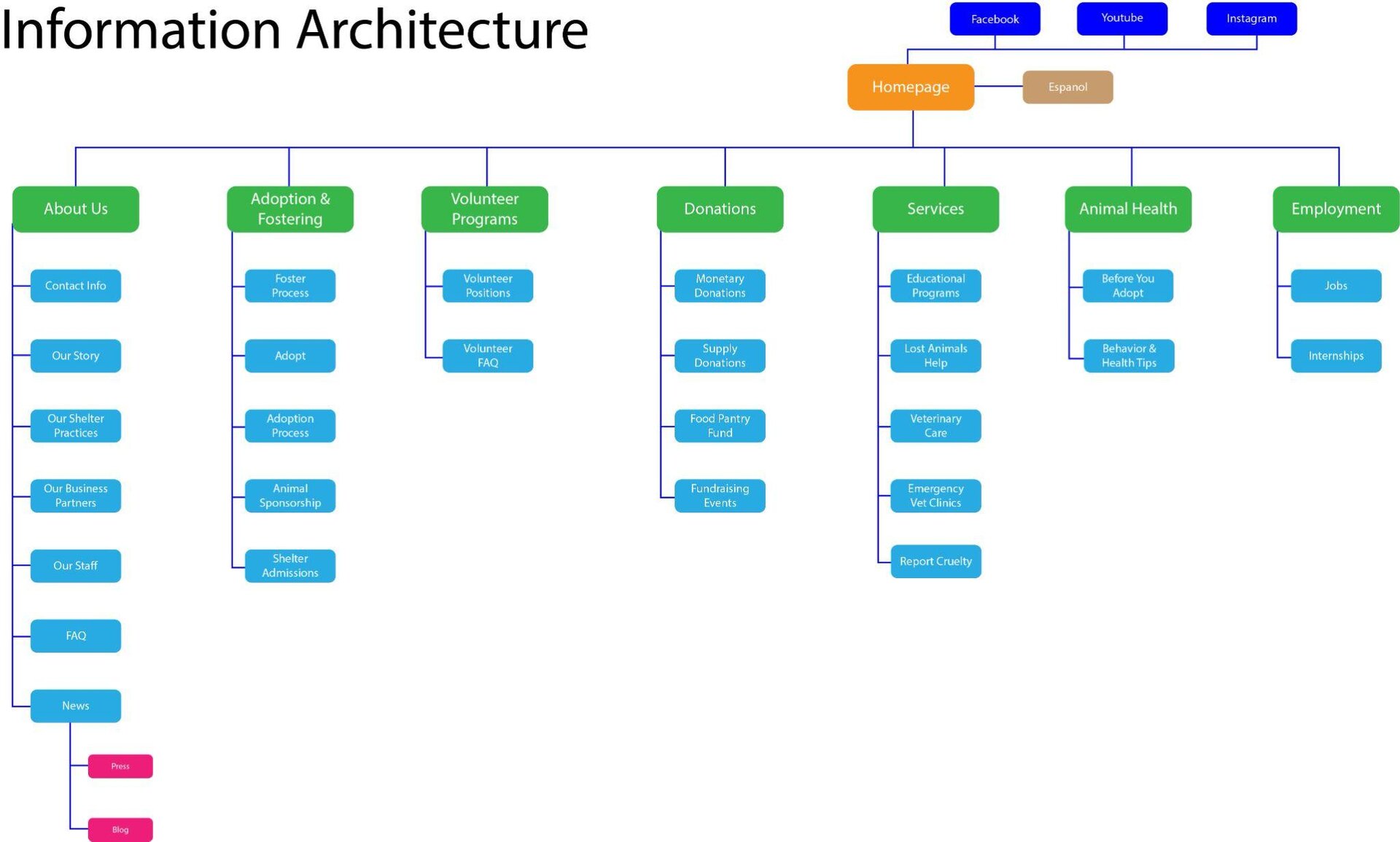
I designed the IA to solve common problems found in competitor sites:
- Right amount of information: Provide exactly what users need at each decision point
- Self-service adoption process: Enable users to browse, learn, and schedule without phone calls
- Address misconceptions proactively: Counter behavioral concerns and fee anxieties with transparent information
- Clear donor pathways: Make it easy for supporters to contribute financially
Design Approach
Competitive Analysis: Before & After
I analyzed existing humane society websites to identify common UX failures. Here's an example of a typical shelter website with the problems I aimed to solve:
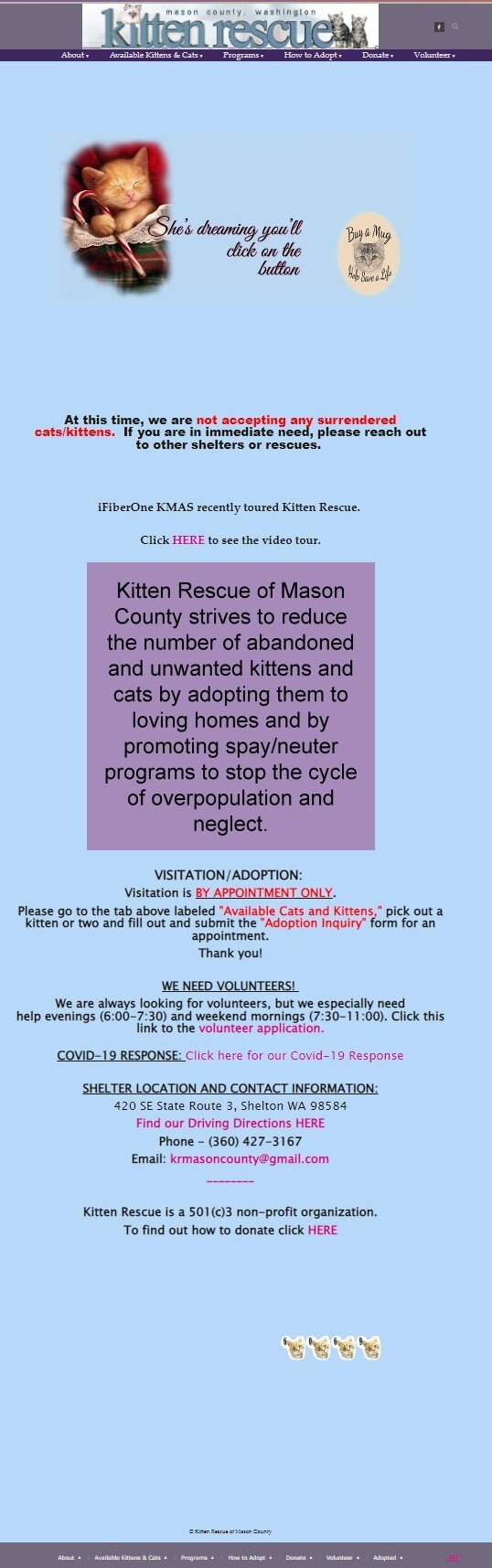
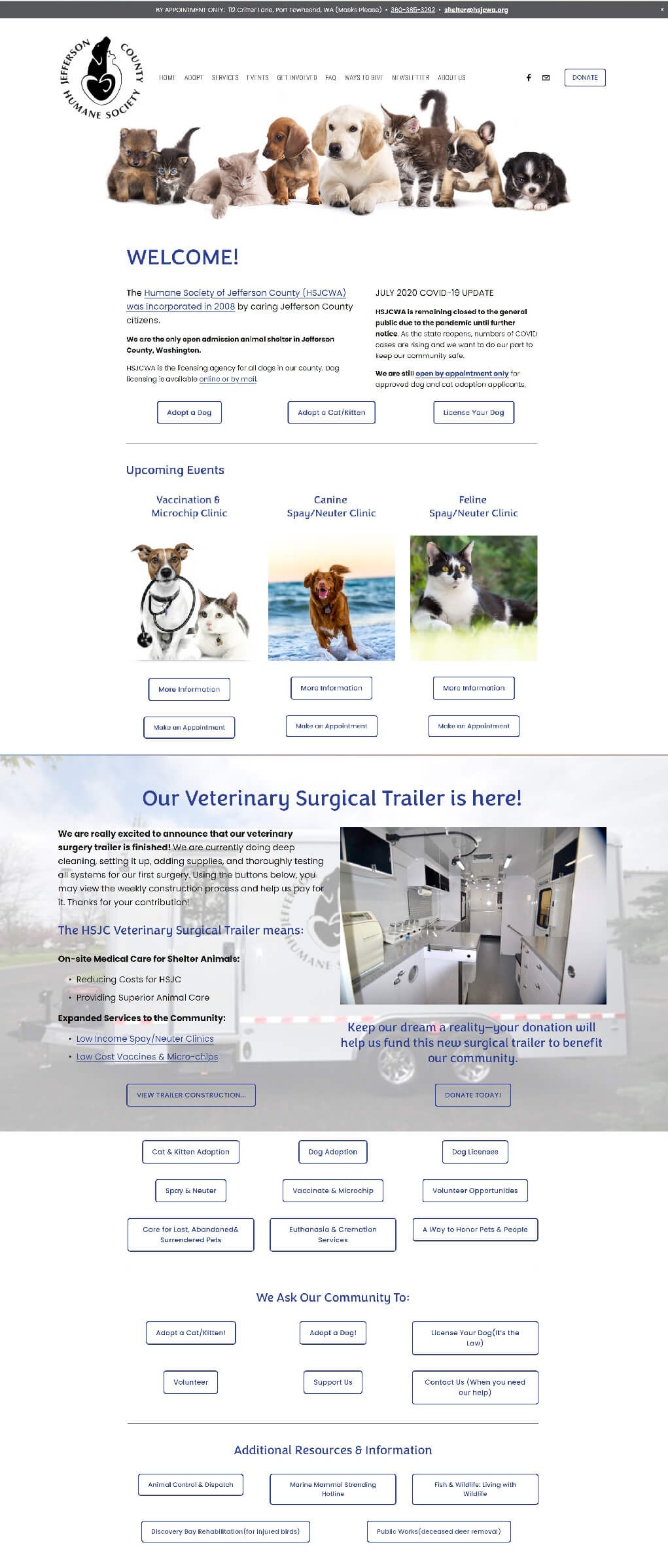
Typical shelter website showing common issues: text-heavy layout, buried CTAs, and poor information hierarchy
Problems Identified:
- Critical information buried in dense text blocks
- "BY APPOINTMENT ONLY" warning not prominent enough
- Multiple competing calls-to-action without clear priority
- Important details (location, hours, contact) relegated to small footer text
- Volunteer recruitment competing with adoption messaging
Core Requirements
To achieve a successful website, Second Chance needed to:
- Generate sustainable income: Achieve annual operating budget through optimized donation flows
- Reduce shelter population: Increase adoption rates by removing barriers
- Increase volunteer recruitment: Make it easy to learn about and sign up for volunteer opportunities
Strategic Focus Areas
- Content optimization: Improve communication to the public with clear, empathetic messaging
- Service design integration: Seamlessly integrate adoption processes into the user journey
- Online donation infrastructure: Implement secure, user-friendly payment processing
- Information availability: Ensure critical details are accessible and easily found
UX Solutions to Adoption Barriers
I designed specific features to address each barrier identified in research:
Addressing Behavioral Concerns (15% of non-adopters):
- Individual animal profiles with personality assessments and behavioral notes
- Success stories from previous adopters
- Information about behavior evaluation and training programs
- Transparent disclosure with context (e.g., "Needs quiet home" vs. "Has behavioral issues")
Addressing Age Preferences (6% of non-adopters):
- Prominent age filtering in search functionality
- Education on benefits of adult dogs (house-trained, calmer temperament)
- Clear labeling of puppies/kittens when available
Addressing Fee Concerns (6% of non-adopters):
- Transparent pricing with breakdown of what's included (vaccinations, spay/neuter, microchip)
- Cost comparison: adoption vs. purchasing + initial vet costs
- Fee assistance programs and special promotions
Key Features & Solutions
Final Visual Design
The final design incorporated a warm, approachable aesthetic that addresses user concerns while maintaining professionalism:
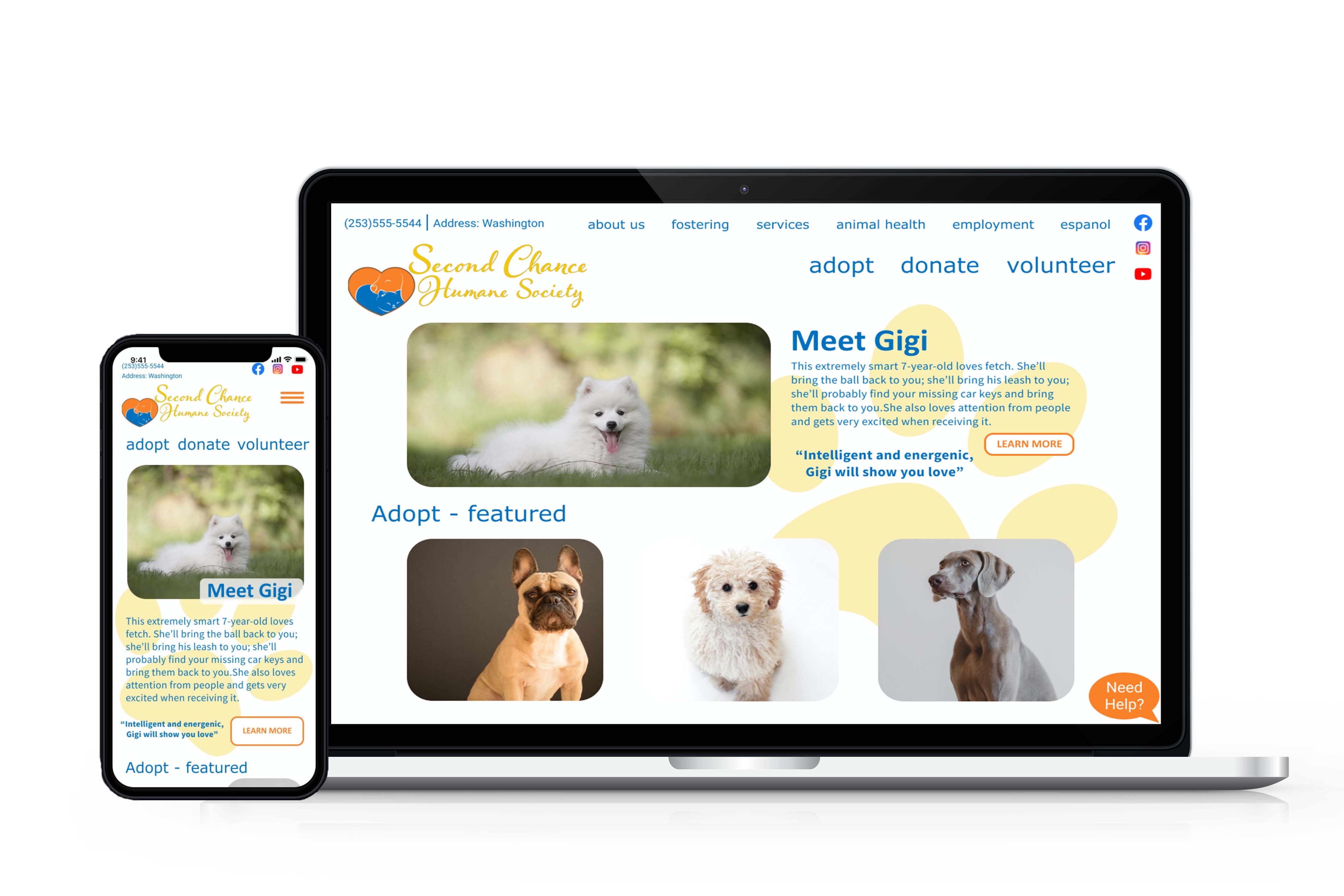
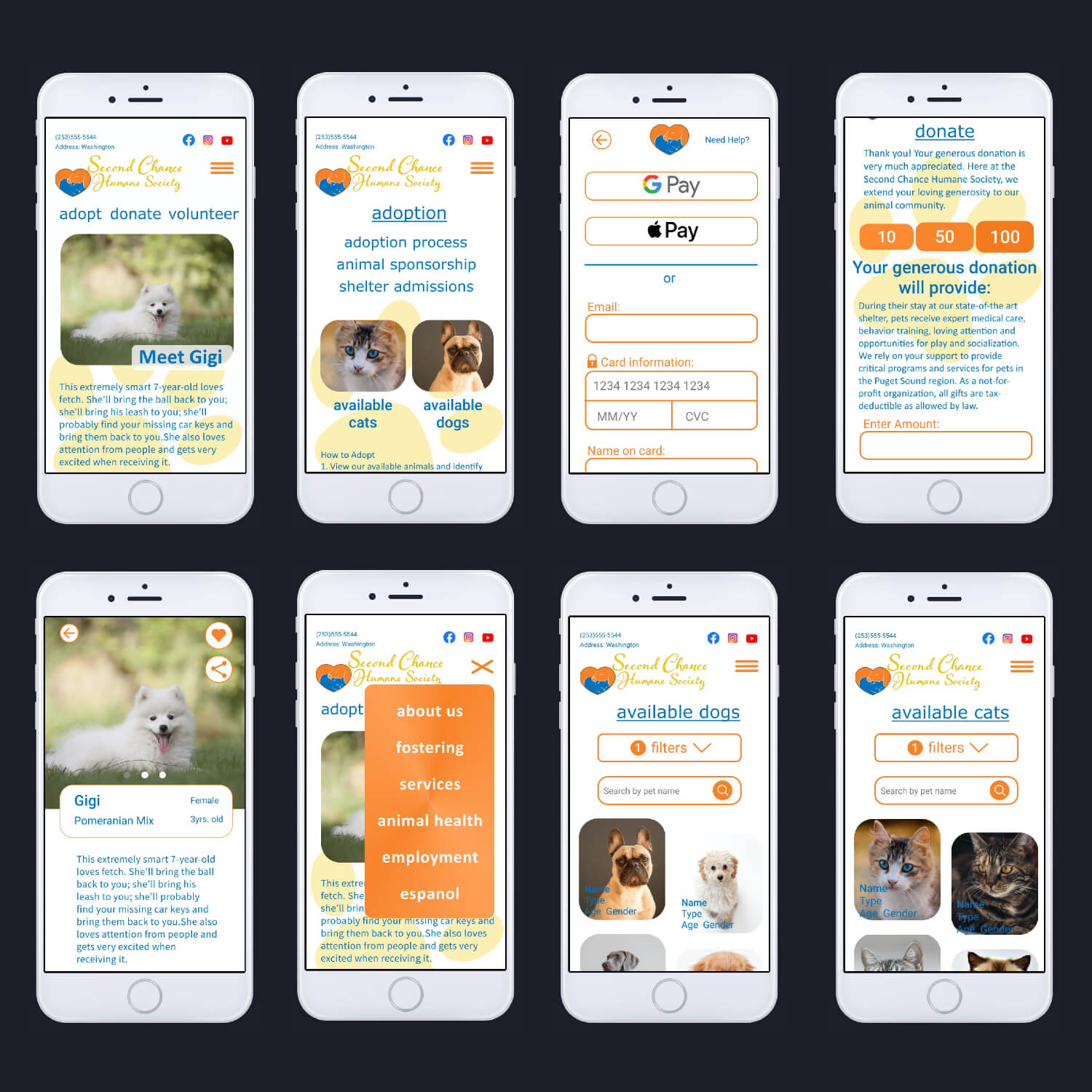
Final visual designs showing homepage, animal profiles, and donation experience
Streamlined Adoption Process
Removed friction by enabling users to:
- Browse available animals with detailed profiles
- Read about care requirements and personality traits
- Submit adoption applications online
- Schedule meet-and-greet appointments through the website
- Access adoption FAQs and resources
Optimized Donation Experience
Designed to maximize individual donor conversions:
- Multiple giving options (one-time, monthly, memorial, sponsorships)
- Impact messaging ("Your $50 provides...")
- Simplified donation forms
- Secure payment integration
- Donor recognition options
Volunteer Recruitment
- Clear volunteer opportunities and requirements
- Online application and scheduling
- Volunteer testimonials and impact stories
Key Deliverables
Research Methodology
- Stakeholder interviews (ongoing project)
- User surveys targeting adopters and non-adopters
- Competitive website audits (Washington state focus)
- Data analysis of industry reports (AVMA, ASPCA, HSUS)
- Financial analysis (Spokane Humane Society annual report)
Impact & Insights
This project demonstrated the power of research-driven design in the nonprofit space. By addressing specific user concerns with empathetic, data-informed solutions, I created a framework that:
- Reduces adoption barriers through transparency and education
- Streamlines the adoption process to reduce abandonment
- Optimizes donation flows to support organizational sustainability
- Balances multiple stakeholder needs (families, donors, volunteers, staff)
Key Lesson: Understanding the "why" behind user behavior—in this case, misconceptions about shelter animals—is essential to designing effective solutions. Simply making information available isn't enough; you must proactively address concerns users may not even verbalize.